
Fraught
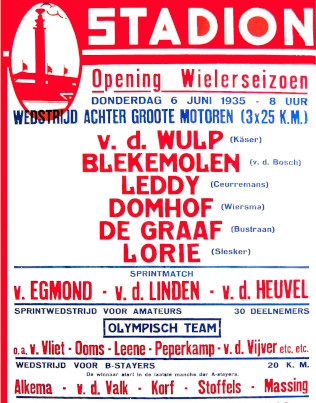
RIH built road racing, sport, and even tandem bicycles, but the name was initially associated with track racing victories. The track successes, proudly listed in advertisements, gave the brand early prominence among the other good Dutch frame builders. RIH built many stayers for the motor-paced track racing circuit. Brother Joop became a leading pacer atop the big motorcycles.
It was a dangerous but lucrative profession for those brave enough to compete. The pacer-stayer team sport uniquely combined the power of motorcycles with the agility of bicycles. As the exhaust of roaring engines filled the air, cyclists needed to pedal faster, maintain higher speeds, and focus intently.
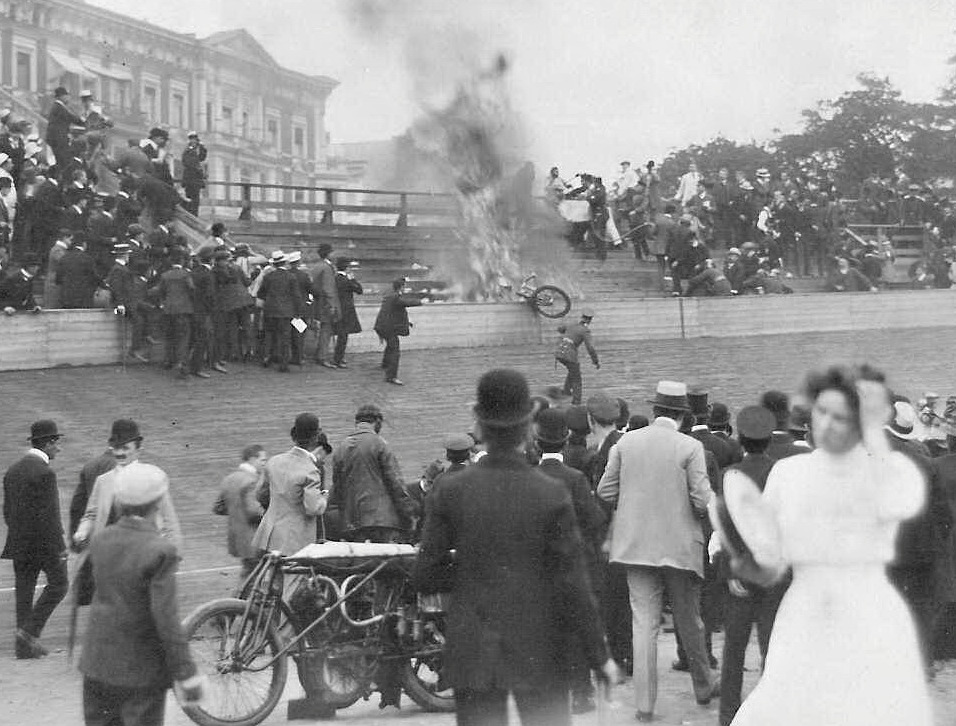
The noisy petrol powered pacers were the big crowd lure. Engine oil leaked onto the track. Crashes were common as the bicycle and motorcycle tires of the day would often fail or slide on the slick track. For years no one wore a helmet. It was perilous for spectators as well. A 1909 crash at Berlin’s Botanical Garden track killed six people and injured 40 others. The packed wooden grandstand caught fire after the motor pacer veered into the crowd.
Put money on it
Motor-paced racing was a popular form of entertainment. Unlike racing on open roads, the sport allowed promoters to profit significantly from velodrome gate admissions and concession sales. As a measure of its popularity, many Dutch cities had a velodrome by the early 1900s. Enthusiasts eagerly debated betting odds over beers in smoky cafes, making it a favorite pastime for those who gambled.
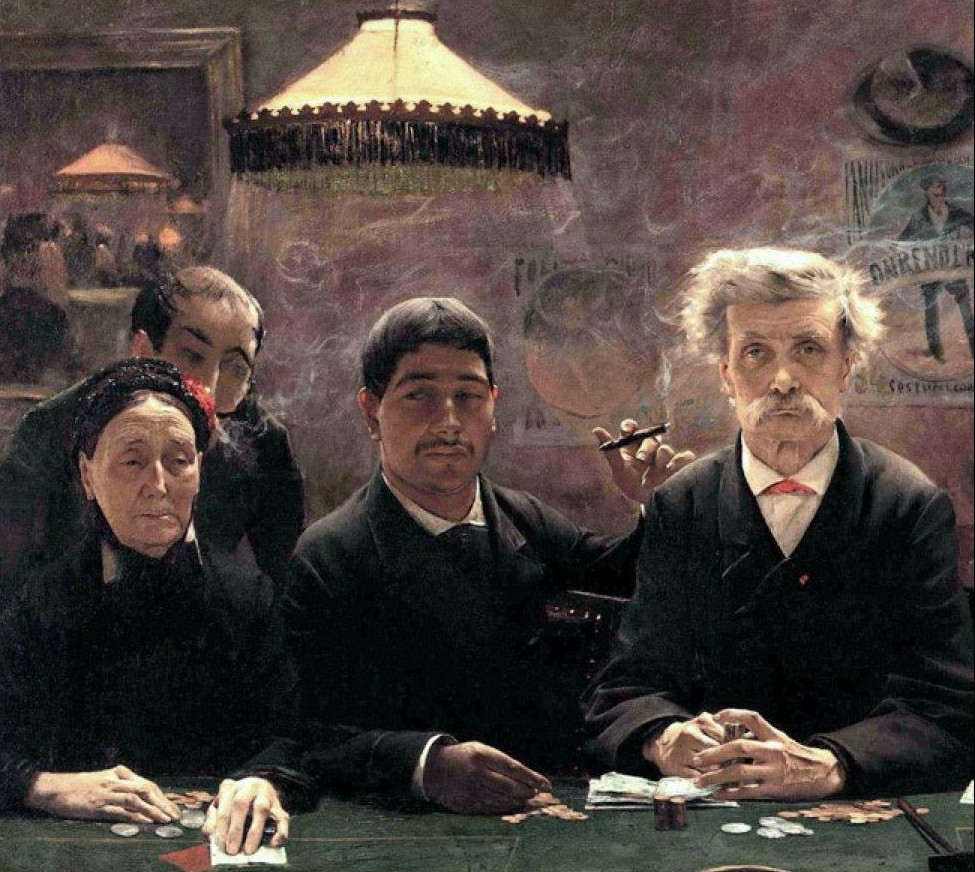
Dutch authorities had a generally restrictive stance toward gambling (it was illegal), but small-scale betting at velodromes was tolerated, operating in a gray legal area. Bookmakers would circulate informally among the crowd at major velodromes, particularly Amsterdam and Rotterdam. Bettors evaluated the stayer’s stamina and sprinting ability. Equally, they judged the pacer’s smoothness in holding a steady high speed, track positioning skills, and loyalty—pacers with long-standing relationships with particular cyclists were favored. The stayer’s ability to win was dependent upon the pacer’s skill. Thus, both stayer and pacer would usually receive a share of the gambling winnings.
Pacers and stayers earned income through official race prizes, appearance fees, occasional under-the-table bonuses provided by race promoters for attracting betting crowds, and a share of the gambling winnings. Following the war regulations began to formalize gambling operations, influencing how racers received payouts from betting winnings. Payouts became more supervised than the more informal arrangements before the war.
Pacers were the engines of the race, not the stars. Their compensation was tied more to their role as senior skilled professionals rather than any celebrity. Compared to other notable Dutch pacers, Joop Bustraan appears to be a strong competitor but generally ranked below the leading names dominating the sport. He occasionally participated in major track events in neighboring Belgium and Germany, but was not as prominent as some of his highly accomplished compatriots.
Partnerships
Built for strength, these purpose-built stayers can reach astonishing speeds of up to 100 kph (60 mph), requiring solid and robust frames to withstand the intense velocity and competition on the track. The pacer creates the slipstream—a pocket of still air—standing wide and erect on a motorcycle while dressed in a heavy leather suit. The lower wind resistance offered higher cycling speeds and required new skills, strategy and practice. It also demanded a different type of bicycle. Redesigned stronger bicycle frames with unconventional dimensions were tested and refined.
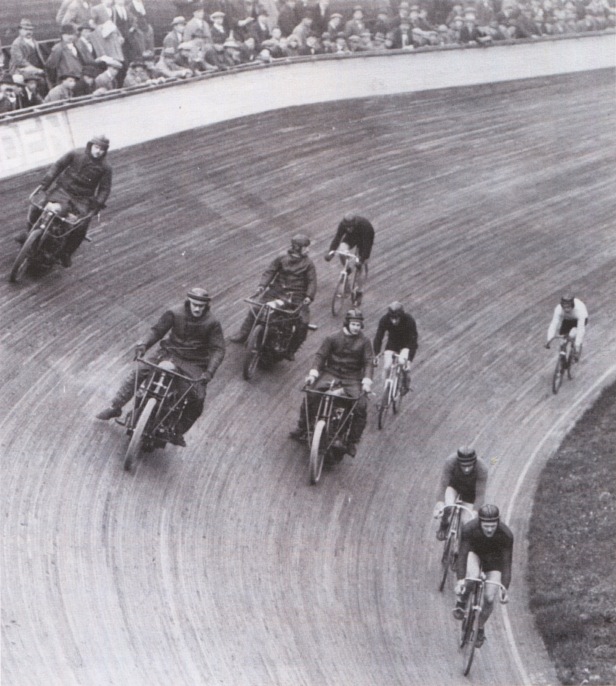
In the thrilling world of motor-paced racing, the stayer and pacer formed a potent duo with the pacer often directing on-road tactics through voice commands, hand signals, and trust. The pacer needed to be continuously aware of the cyclist’s speed. He held a steady throttle and feathered the brakes. When he sensed they could attack, the pacer pulled the pair into the attack.
Unlike the smaller and slower Derny motorized pacers introduced shortly before the war, Joop’s motorcycle engines boasted impressive displacements of up to 2 liters. Designed with low gear ratios, their acceleration and deceleration characteristics were not easily matched to the closely following cyclist. To prevent the stayer’s front wheel from catastrophically hitting the pacer’s rear wheel, a roller was installed behind the pacer’s rear wheel.
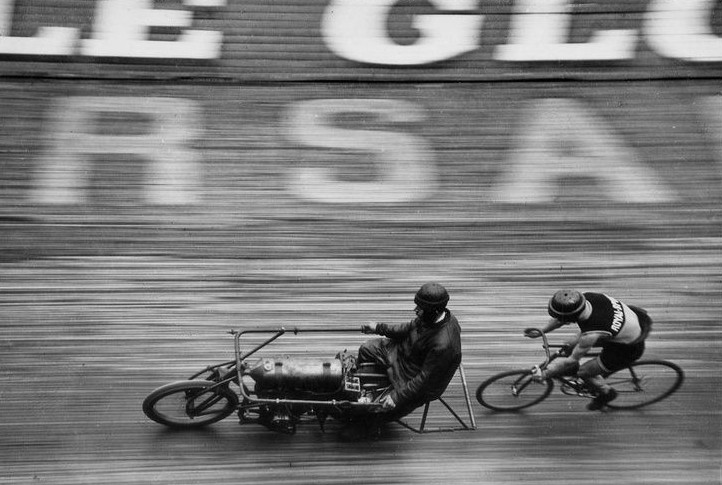
As they competed, racers zoomed along at high speeds with just inches separating the pacer’s back roller from the rider’s front wheel. This close formation required precision as the group navigated the banking slopes together. Attackers had to fight against the turbulence being generated by the pair in front. Crashes and tire bursts. It was a risky, even lethal, sport. The hazards, adrenaline, and excitement of the sport captivated spectators.
Crafting the stayer
Building stayers was a specialty within a specialty. In one sense, the frame builder’s final work is merely pieced together from parts catalogs from other manufacturers. On the other hand, every aspect, every nuance of the rider’s performance is translated through the frame itself. Frame deflection. Turning characteristics.
Racing frames are designed to be lightweight, but stayers are designed to be even lighter by eliminating derailleur and brake systems. Equipped with just one large gear (typically with more than 60 teeth), these bikes are specifically targeted for closed track performance.
Stayer bikes are truly remarkable in appearance. Aerodynamically optimized, they are built with a shorter, tighter frame, a higher bottom bracket, a shorter crank, a smaller front wheel, and a reverse fork. The handlebars are positioned further forward to bring the rider closer to the pacer’s slipstream.
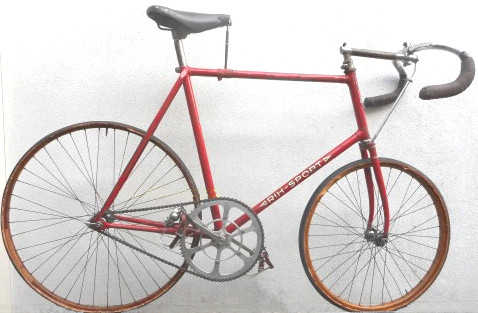
To enhance stability and reduce flex, both the saddle and handlebar stem are supported by struts. The wheels are more rigid, featuring high flanges and shorter spokes that are wired together for added strength. Crafting such a lightweight and stiff frame is an art perfected over years. This attention to detail recalls Willem’s exceeding dismay about temperature changes on a cooling brazed joint.